Here is a link to a NYT’s article by Edmund Andrews, “Surprising Jump in Tax Revenues is Curbing Deficit”.
One lesson illustrated by the story is the surprising amount of uncertainty in economic forecasts. Short term forecasts typically are very wrong. Long term forecasts typically are more uncertain than short term forecasts. Nobody knows much about what will happen long term. Would the stock market fluctuate so much as it does if economic variables could be forecasted accurately? The author fails to point this out.
Another lesson is that politicians and the media typically talk as if their favorite economic forecasts are accurate, despite that they are not. The author fails to point this out.
A third lesson is that politicians and the media get away with their spin because it is successful in influencing voters. Hence, voters' understanding of the issues is the problem, not the media and politicians. The author fails to point this out.
Here are some excerpts, with my comments.
An unexpectedly steep rise in tax revenues from corporations and the wealthy is driving down the projected budget deficit this year, even though spending has climbed sharply because of the war in Iraq and the cost of hurricane relief.
The unexpected is about all that can be really expected.
Congressional analysts say the surprise windfall could shrink the deficit this year to $300 billion, from $318 billion in 2005 and an all-time high of $412 billion in 2004.
"The fact is that revenues are way below what the administration said they would be a few years ago," said Thomas S. Kahn, staff director for Democrats on the House Budget Committee. "The long-term prognosis is still very, very bleak, and the administration doesn't have any kind of long-term plan."
This spin simply shows that Mr. Kahn is unable to address the real issues. Does he have a better forecasting methodology? Does he have a long-term plan?
The surge could also evaporate as quickly as it appeared. Over the past decade, tax revenues have become much more volatile, alternately soaring and plunging in the wake of swings in the stock market and repeatedly defying government projections.
Have tax revenues become more volatile? Where is the evidence? Should we take the NYT’s word?
Both supporters and critics of Mr. Bush cautioned against attributing much long-term significance to the recent fiscal improvement, in part because tax revenues have become more volatile.
Volatility is different from trend. If up volatility is not to be extrapolated, why should down volatility be extrapolated? If neither is to be extrapolated, what does that imply about all the media and political spin? Why does the author quote the spin without noting that it is rubbish?
Compared with the size of the economy, tax revenues are still below historical norms and far below what the administration predicted as recently as 2003.
More spin. Tax revenues also are far higher than others predicted as recently as 2003. This is not mentioned. Why?
Low tax revenues as a percent of the economy may be good. They may increase growth and increase the present value of tax revenues. This possibility is not mentioned. Why?
Sunday, July 09, 2006


Friday, July 07, 2006
A Wall Street Journal statistical oops
The Wall Street Journal’s recent editorial “Safe at Any Speed” is a nice piece, but the Editor fails to realize that the data he uses to draw his conclusion actually suggests the opposite conclusion.
Here are some excerpts from the editorial.
In 2005, according to new data from the National Highway Safety Administration, the rate of injuries per mile traveled was lower than at any time since the Interstate Highway System was built 50 years ago. The fatality rate was the second lowest ever, just a tick higher than in 2004.
As a public policy matter, this steady decline is a vindication of the repeal of the 55 miles per hour federal speed limit law in 1995.
This may seem non-controversial now, but at the time the debate was shrill and filled with predictions of doom. Ralph Nader claimed that "history will never forgive Congress for this assault on the sanctity of human life." Judith Stone, president of the Advocates for Highway and Auto Safety, predicted to Katie Couric on NBC's "Today Show" that there would be "6,400 added highway fatalities a year and millions of more injuries." Federico Pena, the Clinton Administration's Secretary of Transportation, declared: "Allowing speed limits to rise above 55 simply means that more Americans will die and be injured on our highways."
We now have 10 years of evidence proving that the only "assault" was on the sanctity of the truth. The nearby table shows that the death, injury and crash rates have fallen sharply since 1995. Per mile traveled, there were about 5,000 fewer deaths and almost one million fewer injuries in 2005 than in the mid-1990s. This is all the more remarkable given that a dozen years ago Americans lacked today's distraction of driving while also talking on their cell phones.
The table, presented in the editorial, shows a 16% decline in the fatality rate per 100 million miles vehicle miles traveled. However, it also shows a 37% decline in the injury rate and a 33% decline in the crash rate. Since the fatality rate was down less than the injury and crash rates, the probability of fatality given an injury or a crash is up, and substantially. This suggests that crashes are more dangerous now, exactly what would be expected if driving speed is higher.
Pedestrian deaths also are down less than crashes. This suggests a higher probability of a pedestrian death given a crash. This also is what would be expected if driving speed is higher.
Of course, there are many other things going on and there is no test of statistical significance, so all of my comments, including the WSJ’s comments are speculative. Nevertheless, it is nice to see, in some gross sense, that the fear mongers were wrong.
Here are some excerpts from the editorial.
In 2005, according to new data from the National Highway Safety Administration, the rate of injuries per mile traveled was lower than at any time since the Interstate Highway System was built 50 years ago. The fatality rate was the second lowest ever, just a tick higher than in 2004.
As a public policy matter, this steady decline is a vindication of the repeal of the 55 miles per hour federal speed limit law in 1995.
This may seem non-controversial now, but at the time the debate was shrill and filled with predictions of doom. Ralph Nader claimed that "history will never forgive Congress for this assault on the sanctity of human life." Judith Stone, president of the Advocates for Highway and Auto Safety, predicted to Katie Couric on NBC's "Today Show" that there would be "6,400 added highway fatalities a year and millions of more injuries." Federico Pena, the Clinton Administration's Secretary of Transportation, declared: "Allowing speed limits to rise above 55 simply means that more Americans will die and be injured on our highways."
We now have 10 years of evidence proving that the only "assault" was on the sanctity of the truth. The nearby table shows that the death, injury and crash rates have fallen sharply since 1995. Per mile traveled, there were about 5,000 fewer deaths and almost one million fewer injuries in 2005 than in the mid-1990s. This is all the more remarkable given that a dozen years ago Americans lacked today's distraction of driving while also talking on their cell phones.
The table, presented in the editorial, shows a 16% decline in the fatality rate per 100 million miles vehicle miles traveled. However, it also shows a 37% decline in the injury rate and a 33% decline in the crash rate. Since the fatality rate was down less than the injury and crash rates, the probability of fatality given an injury or a crash is up, and substantially. This suggests that crashes are more dangerous now, exactly what would be expected if driving speed is higher.
Pedestrian deaths also are down less than crashes. This suggests a higher probability of a pedestrian death given a crash. This also is what would be expected if driving speed is higher.
Of course, there are many other things going on and there is no test of statistical significance, so all of my comments, including the WSJ’s comments are speculative. Nevertheless, it is nice to see, in some gross sense, that the fear mongers were wrong.
Thursday, July 06, 2006
Personal observations about handgun sights
My handguns have a variety of sights, including three dot tritium, front sight only tritium, Big Dot tritium, LaserGrip, and plain iron.
All the tritium sights are easily visible to me at night. However, I occasionally have a delay in identifying which is the front sight in the three dot tritium system. There is no delay with tritium in only the front sight or in a different form on the front and rear sights, as with the Big Dot.
In the past, I had an integral laser sight on my Glock. However, I no longer have it installed, mostly because it took too much time to turn on, but also because the laser light was visible to an adversary due to scattering of the beam in the air.
I find the LaserGrip much more effective. It is very bright, makes targeting easy, and the front of the grip micro switch allows me to turn it on the instant prior to firing by adding a little pressure to one finger on the grip. That way, I do not give away my position with what amounts to a very long, bright light sword.
For daylight shooting at intermediate distances, I prefer a very bright front sight. Day-Glo white or red sounds good to me, but I have not yet looked into having my iron front sights painted.
All the tritium sights are easily visible to me at night. However, I occasionally have a delay in identifying which is the front sight in the three dot tritium system. There is no delay with tritium in only the front sight or in a different form on the front and rear sights, as with the Big Dot.
In the past, I had an integral laser sight on my Glock. However, I no longer have it installed, mostly because it took too much time to turn on, but also because the laser light was visible to an adversary due to scattering of the beam in the air.
I find the LaserGrip much more effective. It is very bright, makes targeting easy, and the front of the grip micro switch allows me to turn it on the instant prior to firing by adding a little pressure to one finger on the grip. That way, I do not give away my position with what amounts to a very long, bright light sword.
For daylight shooting at intermediate distances, I prefer a very bright front sight. Day-Glo white or red sounds good to me, but I have not yet looked into having my iron front sights painted.
Tradeoffs: Gun locks
John Lott has a thoughtful column in the Washington Times, “A False Safety”. It points out the unintended consequences of gun laws.
Failing to address tradeoffs often costs lives.
Here are some excerpts.
“Academic studies of safe-storage and gun-lock laws have also overwhelmingly found no evidence that they reduce the total number of suicides -- although a few studies have found some small reductions in suicides committed with guns. There are simply too many ways to commit suicide. If people are intent on killing themselves, they will still do it, with or without a gun.”
“Yet, gun locks also pose real risks. Besides the costs that may deter poor people from buying guns, locked guns are also not as readily accessible for defensive gun uses. Since potentially armed victims deter criminals, storing a gun locked and unloaded may therefore increase crime.”
“Research that I have done examining juvenile accidental gun deaths or suicides for all U.S. states from 1977 to 1998 found that safe-storage laws had no impact on either type of death. The families that obeyed the laws were the ones where there were essentially no accidental deaths occurring. What did happen, however, was that law-abiding citizens were less able to defend themselves against crime.”
John closes his article with:
“Laws frequently have unintended consequences. Sometimes even the best intentioned ones cost lives.”
Right on, John.
Failing to address tradeoffs often costs lives.
Here are some excerpts.
“Academic studies of safe-storage and gun-lock laws have also overwhelmingly found no evidence that they reduce the total number of suicides -- although a few studies have found some small reductions in suicides committed with guns. There are simply too many ways to commit suicide. If people are intent on killing themselves, they will still do it, with or without a gun.”
“Yet, gun locks also pose real risks. Besides the costs that may deter poor people from buying guns, locked guns are also not as readily accessible for defensive gun uses. Since potentially armed victims deter criminals, storing a gun locked and unloaded may therefore increase crime.”
“Research that I have done examining juvenile accidental gun deaths or suicides for all U.S. states from 1977 to 1998 found that safe-storage laws had no impact on either type of death. The families that obeyed the laws were the ones where there were essentially no accidental deaths occurring. What did happen, however, was that law-abiding citizens were less able to defend themselves against crime.”
John closes his article with:
“Laws frequently have unintended consequences. Sometimes even the best intentioned ones cost lives.”
Right on, John.
Wednesday, July 05, 2006
Tradeoffs: The Euorpean Parliament's green tax
Here is another example of the failure to think properly about tradeoffs, this time by the European Parliament and the Greens.
According to the Times On Line in the UK:
”AIR passengers will be charged up to £40 extra for a return ticket within Europe to pay for the environmental impact of their journeys . . .”
“MEPs voted in favour of the “immediate introduction” of a tax on jet fuel for flights within the 25 member states of the EU. The charge would double the cost of millions of budget airline flights.”
“They also accepted a recommendation for a special emissions trading scheme for the aviation industry, which would see airlines buying permits to cover their output of carbon dioxide.”
Let’s presume that the airlines’ carbon dioxide emissions create costs for others (externalities). Then one could argue that the airlines should pay those costs. One problem in figuring out what to charge the airlines is that the costs, or damages, to others cannot be measured accurately. Who is damaged and by how much? It is not likely that Government will come up with the right number.
“The main proposal was for airlines to be forced to buy emissions permits within a separate trading scheme dedicated to aviation, with a specific cap on the amount of CO2.”
Since nobody knows the actual damages, it is unlikely that the chosen “specific cap on the amount of CO2” is right. Since the scheme is dedicated to aviation, the charge per unit of CO2 emissions varies from one CO2 source to another. Since the cap applies to aviation and the problem is in the aggregate, the cap is almost certainly wrong.
Parliament’s approach guarantees an inefficient equilibrium for the economy. It could well be that the inefficiency creates more damage than the CO2 emissions.
“BA had wanted to be allowed virtually unlimited growth by being able to buy cheap surplus permits from other industries.”
BA’s position is partly right. If there is going to be a permit scheme, the permits should be tradable. If they are not, it distorts economic equilibrium. The decision to charge non-airline industries less for their permits is ludicrous.
“The GreenSkies Alliance, a coalition of environmental groups that opposes the growth of aviation, said ‘The huge European Parliament majority shows that MEPs overwhelmingly recognise that air transport’s greenhouse gas emissions are out of control and urgent action to control them is long overdue.’”
The focus on one source of CO2 emissions is nonsensical and reflects an agenda that is not helpful. This is all too common with activists. They go after people they don’t like rather than try to ameliorate the problem, assuming it exists, in a helpful way.
“Andrew Sentance, BA’s head of environmental affairs, admitted that aviation could account for almost half of Britain’s total CO2 emissions by 2050, compared with 6 per cent today.”
Of course, since the predicted growth is pure extrapolation, it may not happen.
The predicted growth sounds really bad, but can happen only if the airlines are performing an extremely valuable service. In this case, the scheme focuses on reducing valuable services when it might be better to reduce other services. All this would be taken care of automatically if permits were priced the same to everyone and tradable.
“He said that imposing a cap on aviation emissions would “deny society the right to make choices” about how to tackle climate change. He said society might prefer to continue to allow flights to grow but to reduce emissions elsewhere to compensate, such as in power generation or road transport.”
Score one for BA. It is right and Parliament and the Greens are wrong.
Somehow, Governments and activists always manage to screw up.
According to the Times On Line in the UK:
”AIR passengers will be charged up to £40 extra for a return ticket within Europe to pay for the environmental impact of their journeys . . .”
“MEPs voted in favour of the “immediate introduction” of a tax on jet fuel for flights within the 25 member states of the EU. The charge would double the cost of millions of budget airline flights.”
“They also accepted a recommendation for a special emissions trading scheme for the aviation industry, which would see airlines buying permits to cover their output of carbon dioxide.”
Let’s presume that the airlines’ carbon dioxide emissions create costs for others (externalities). Then one could argue that the airlines should pay those costs. One problem in figuring out what to charge the airlines is that the costs, or damages, to others cannot be measured accurately. Who is damaged and by how much? It is not likely that Government will come up with the right number.
“The main proposal was for airlines to be forced to buy emissions permits within a separate trading scheme dedicated to aviation, with a specific cap on the amount of CO2.”
Since nobody knows the actual damages, it is unlikely that the chosen “specific cap on the amount of CO2” is right. Since the scheme is dedicated to aviation, the charge per unit of CO2 emissions varies from one CO2 source to another. Since the cap applies to aviation and the problem is in the aggregate, the cap is almost certainly wrong.
Parliament’s approach guarantees an inefficient equilibrium for the economy. It could well be that the inefficiency creates more damage than the CO2 emissions.
“BA had wanted to be allowed virtually unlimited growth by being able to buy cheap surplus permits from other industries.”
BA’s position is partly right. If there is going to be a permit scheme, the permits should be tradable. If they are not, it distorts economic equilibrium. The decision to charge non-airline industries less for their permits is ludicrous.
“The GreenSkies Alliance, a coalition of environmental groups that opposes the growth of aviation, said ‘The huge European Parliament majority shows that MEPs overwhelmingly recognise that air transport’s greenhouse gas emissions are out of control and urgent action to control them is long overdue.’”
The focus on one source of CO2 emissions is nonsensical and reflects an agenda that is not helpful. This is all too common with activists. They go after people they don’t like rather than try to ameliorate the problem, assuming it exists, in a helpful way.
“Andrew Sentance, BA’s head of environmental affairs, admitted that aviation could account for almost half of Britain’s total CO2 emissions by 2050, compared with 6 per cent today.”
Of course, since the predicted growth is pure extrapolation, it may not happen.
The predicted growth sounds really bad, but can happen only if the airlines are performing an extremely valuable service. In this case, the scheme focuses on reducing valuable services when it might be better to reduce other services. All this would be taken care of automatically if permits were priced the same to everyone and tradable.
“He said that imposing a cap on aviation emissions would “deny society the right to make choices” about how to tackle climate change. He said society might prefer to continue to allow flights to grow but to reduce emissions elsewhere to compensate, such as in power generation or road transport.”
Score one for BA. It is right and Parliament and the Greens are wrong.
Somehow, Governments and activists always manage to screw up.
Tuesday, July 04, 2006
Tradeoffs: Guns
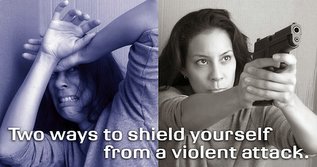 This picture captures a beneficial side of allowing qualified citizens to carry concealed weapons that anti-gun groups either do not mention or sweep under the rug by claiming resisting with a gun is more likely to result in injury or death than not resisting with a gun.
As John Lott and others have shown, resisting with a gun is considerably safer than other alternatives.
The typical anti-gunner characterization of gun owners as gun nuts looking for an opportunity to shoot someone also is inaccurate. I would not shoot someone unless it was absolutely necessary to prevent the death or extremely serious injury of my family. Nor would other gun owners I know.
I strongly recommend John Lott's book "The Bias Against Guns" as an interesting and informative read. You will hear a lot of BS about Lott's method of analysis and results. Speaking as one who has used econometric techniques, and even taught them, I find the work of Lott and his colleagues well above average for the field. Moreover, I find the widely quoted critiques of his work, that I have read, biased and mistaken.

My Bonanza
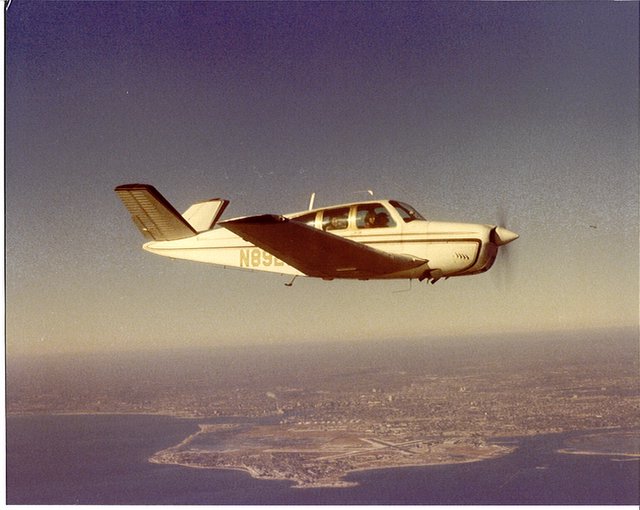 For about ten years, I owned and flew this Beech S-35 Bonanza. It was fully instrument equipped. About one-third of my flight time was on instruments, either in instrument weather or under the hood.
I initially kept the Bonanza at Zahns airport, out on Long Island, NY. It no longer exists. When Zahns closed, I moved across the street to Republic airport.
I had one mid air collision in this aircraft. Climbing out of a Long Island airport at 130 mph, I ran into a seagull. It hit the leading edge of the left wing and splashed, like an insect on a car windshield. There was a rather large dent in the wing's leading edge, fortunately between the ribs. Nevertheless, it cost over $1,000 to fix (1975 dollars).
Sunday, July 02, 2006
Global warming: Are we the enemy?
Here is an article by an MIT Professor that suggests caution about buying into Al Gore's certainty.
http://www.opinionjournal.com/extra/?id=110008597
Enjoy.
http://www.opinionjournal.com/extra/?id=110008597
Enjoy.
Tradeoffs: Wearing helmets
Every media discussion I have read or seen assumes that helmets save lives. I have yet to see the discussants present any evidence that warrants this conclusion, nor consider any of the tradeoffs that might make it sensible for some cyclists not to wear helmets.
A while ago, the Miami Herald ran an editorial noting the lives saved by helmets. The reasoning was based on the notion that cyclist fatalities rose after the helmet law was rescinded. This was a very short period.
The editorial was followed by a letter from Jack Grossman, past Chief, Division of Plastic Surgery, Mercy Hospital. The letter is titled “Wearing a helmet vs. a lifetime of disability”.
Dr. Grossman’s letter is reproduced below. Read it and see how many things, including tradeoffs, that you can find that he overlooked.
I have listed some things I think are relevant following the letter.
“The June 21 editorial No-helmet law ushered in fatal era is so true, sadly. Not wearing a helmet is absolutely foolhardy. Common sense and good judgment must prevail. Safety helmets save lives and can minimize serious skull and complex facial-skeletal fractures, as well as destructive soft-tissue injuries.
The use of a full-face helmet, properly padded and secured, protects the lower facial and jaw areas, providing greater safety for the rider. This type of head gear is used in professional motorsports. Anything less, such as open-face or crown-only helmets, might increase the risk of serious injuries.
Consider the nature of devastating injuries that often result -- partial or permanent neurological dysfunction; extended or lifetime disability; and permanent disfigurement, to name a few. Then there are complex and risky issues of neurosurgical, orthopedic and reconstructive surgeries; extended hospitalizations usually involving specialized intensive care in a trauma center; weeks or months of rehabilitation treatments; protracted loss of income, etc.
Imagine the financial expense involved because of these injuries. The mandatory personal-injury protection vehicular-insurance benefits may have already been exhausted by the med-evac helicopter ride to the trauma center or certainly in the first 25 hours of diagnostic and specialized critical-care management once there. The cost of such care can be staggering and eventually exceed the injured's insurance coverage and the ability to pay enormous balances out-of-pocket.
What about the uninsured or underinsured rider? When this situation occurs, it becomes our -- nonriders' -- collective responsibility to pay the rider's medical bills in the form of: 1. assessed local taxes to subsidize the unreimbursed expenses for the continued operation of our county/regional trauma centers where most of the initial treatment takes place; and 2. continuously increasing auto- and healthcare-insurance rates for everyone.
These remarks reflect some of my professional experiences after many years of practice in the field. If you have friends or family members who must ride, insist that they wear proper full-face helmets. Although the feeling of the wind through one's hair is invigorating or even ''cool,'' the feeling of asphalt across one's face is definitely not. Just ask Pittsburgh Steeler Ben Roethlisberger.”
Here are some observations.
One or two observations do not convey useful information about a change in the mean. That the fatality rate rose after the helmet law was rescinded is little grounds for drawing a conclusion unless there are enough observations to justify one and the many other factors that influence the fatality rate are controlled for.
Even if helmets reduce the fatality rate, that does not imply that all people should wear helmets. It is sensible to take a risk if there is sufficient compensating gain. For some people, the enjoyment of cycling is increased substantially. The risk of fatality is low, with or without a helmet. It is easy for the former to matter more than the latter.
The increased risk associated with not wearing a helmet, other things equal, is not relevant. The risk can be reduced by driving more carefully. Cyclists who make this choice probably save innocent lives.
Helmets may reduce the fatality rate but increase the rate of serious permanent brain damage or quadriplegia. For some, death is preferable to brain damage and quadriplegia.
Not wearing helmets could lead to lower health costs. Treating more serious survivable injuries does cost more than treating less serious survivable injuries. But that ignores the possibility that without helmets, a lot of the more serious survivable injuries may be converted to deaths, which involve low health costs. Brain damaged people and quadriplegics cost a lot.
Drawing a conclusion from a particular event, Ben Roethlisberger, is about the worst logic possible. Dr. Grossman is good at rhetoric, but rhetoric is not analysis.
Dr. Grossman notes the tradeoff between the “feeling of the wind through one's hair” versus the “feeling of asphalt across one's face”. However it does not dawn on him that one can feel an awful lot of the former at only a small risk of the latter. He fails to realize that this tradeoff is the basis for the decision, not minimizing injury or health cost. If the world was about minimizing injury or health cost, cycling, or driving cars, would not be legal except for absolute necessity.
A case can be made that those most at risk when not wearing a helmet are those who are more likely to kill innocents, either in a car or on a cycle. So, perhaps it is better that they not wear helmets and, for the most part, only kill themselves.
A while ago, the Miami Herald ran an editorial noting the lives saved by helmets. The reasoning was based on the notion that cyclist fatalities rose after the helmet law was rescinded. This was a very short period.
The editorial was followed by a letter from Jack Grossman, past Chief, Division of Plastic Surgery, Mercy Hospital. The letter is titled “Wearing a helmet vs. a lifetime of disability”.
Dr. Grossman’s letter is reproduced below. Read it and see how many things, including tradeoffs, that you can find that he overlooked.
I have listed some things I think are relevant following the letter.
“The June 21 editorial No-helmet law ushered in fatal era is so true, sadly. Not wearing a helmet is absolutely foolhardy. Common sense and good judgment must prevail. Safety helmets save lives and can minimize serious skull and complex facial-skeletal fractures, as well as destructive soft-tissue injuries.
The use of a full-face helmet, properly padded and secured, protects the lower facial and jaw areas, providing greater safety for the rider. This type of head gear is used in professional motorsports. Anything less, such as open-face or crown-only helmets, might increase the risk of serious injuries.
Consider the nature of devastating injuries that often result -- partial or permanent neurological dysfunction; extended or lifetime disability; and permanent disfigurement, to name a few. Then there are complex and risky issues of neurosurgical, orthopedic and reconstructive surgeries; extended hospitalizations usually involving specialized intensive care in a trauma center; weeks or months of rehabilitation treatments; protracted loss of income, etc.
Imagine the financial expense involved because of these injuries. The mandatory personal-injury protection vehicular-insurance benefits may have already been exhausted by the med-evac helicopter ride to the trauma center or certainly in the first 25 hours of diagnostic and specialized critical-care management once there. The cost of such care can be staggering and eventually exceed the injured's insurance coverage and the ability to pay enormous balances out-of-pocket.
What about the uninsured or underinsured rider? When this situation occurs, it becomes our -- nonriders' -- collective responsibility to pay the rider's medical bills in the form of: 1. assessed local taxes to subsidize the unreimbursed expenses for the continued operation of our county/regional trauma centers where most of the initial treatment takes place; and 2. continuously increasing auto- and healthcare-insurance rates for everyone.
These remarks reflect some of my professional experiences after many years of practice in the field. If you have friends or family members who must ride, insist that they wear proper full-face helmets. Although the feeling of the wind through one's hair is invigorating or even ''cool,'' the feeling of asphalt across one's face is definitely not. Just ask Pittsburgh Steeler Ben Roethlisberger.”
Here are some observations.
One or two observations do not convey useful information about a change in the mean. That the fatality rate rose after the helmet law was rescinded is little grounds for drawing a conclusion unless there are enough observations to justify one and the many other factors that influence the fatality rate are controlled for.
Even if helmets reduce the fatality rate, that does not imply that all people should wear helmets. It is sensible to take a risk if there is sufficient compensating gain. For some people, the enjoyment of cycling is increased substantially. The risk of fatality is low, with or without a helmet. It is easy for the former to matter more than the latter.
The increased risk associated with not wearing a helmet, other things equal, is not relevant. The risk can be reduced by driving more carefully. Cyclists who make this choice probably save innocent lives.
Helmets may reduce the fatality rate but increase the rate of serious permanent brain damage or quadriplegia. For some, death is preferable to brain damage and quadriplegia.
Not wearing helmets could lead to lower health costs. Treating more serious survivable injuries does cost more than treating less serious survivable injuries. But that ignores the possibility that without helmets, a lot of the more serious survivable injuries may be converted to deaths, which involve low health costs. Brain damaged people and quadriplegics cost a lot.
Drawing a conclusion from a particular event, Ben Roethlisberger, is about the worst logic possible. Dr. Grossman is good at rhetoric, but rhetoric is not analysis.
Dr. Grossman notes the tradeoff between the “feeling of the wind through one's hair” versus the “feeling of asphalt across one's face”. However it does not dawn on him that one can feel an awful lot of the former at only a small risk of the latter. He fails to realize that this tradeoff is the basis for the decision, not minimizing injury or health cost. If the world was about minimizing injury or health cost, cycling, or driving cars, would not be legal except for absolute necessity.
A case can be made that those most at risk when not wearing a helmet are those who are more likely to kill innocents, either in a car or on a cycle. So, perhaps it is better that they not wear helmets and, for the most part, only kill themselves.
Wednesday, June 28, 2006
Figures don't lie, but liars (and incompetents) figure
The media and politicians often tell us something like “Last period’s” result was the worst in “n” periods. Example: Last year’s murder rate was the highest in ten years. They then go on to lament how things have degenerated and to blame someone.
By itself, this kind of statement conveys no useful information about the message topic.
Suppose the underlying murder rate is constant. Due to random fluctuations, each year’s realized murder rate will be different. No matter how large is the highest realized murder rate to date and how small the lowest murder rate to date, the highest and lowest will be surpassed over time. The probability that the media and politicians will jump on this when it occurs is about 1.
Given a murder rate so high that it its probability of being realized in a year is only 10%, then it ought to be realized about once in ten years. The probability that the media and politicians will jump on this when it occurs is about 1. Assuming independence, the probability of not seeing such a high murder rate in ten years is 35%, i.e., there is a probability of 65% of seeing at least one year in a ten year period with such a high murder rate.
Moral: That the media and politicians make a big deal of unusually good or bad outcomes is something that often can be chalked up to either an agenda or ignorance. In either case, it says more about the person than the message topic.
One important probability is the probability that something has changed (good or bad), given that the media and politicians deliver their message. Since it is about equally likely that the media and politicians will deliver their message whether or not there has been an underlying change in circumstances, the fact that they deliver their message conveys approximately no information.
By itself, this kind of statement conveys no useful information about the message topic.
Suppose the underlying murder rate is constant. Due to random fluctuations, each year’s realized murder rate will be different. No matter how large is the highest realized murder rate to date and how small the lowest murder rate to date, the highest and lowest will be surpassed over time. The probability that the media and politicians will jump on this when it occurs is about 1.
Given a murder rate so high that it its probability of being realized in a year is only 10%, then it ought to be realized about once in ten years. The probability that the media and politicians will jump on this when it occurs is about 1. Assuming independence, the probability of not seeing such a high murder rate in ten years is 35%, i.e., there is a probability of 65% of seeing at least one year in a ten year period with such a high murder rate.
Moral: That the media and politicians make a big deal of unusually good or bad outcomes is something that often can be chalked up to either an agenda or ignorance. In either case, it says more about the person than the message topic.
One important probability is the probability that something has changed (good or bad), given that the media and politicians deliver their message. Since it is about equally likely that the media and politicians will deliver their message whether or not there has been an underlying change in circumstances, the fact that they deliver their message conveys approximately no information.
Subscribe to:
Posts (Atom)